
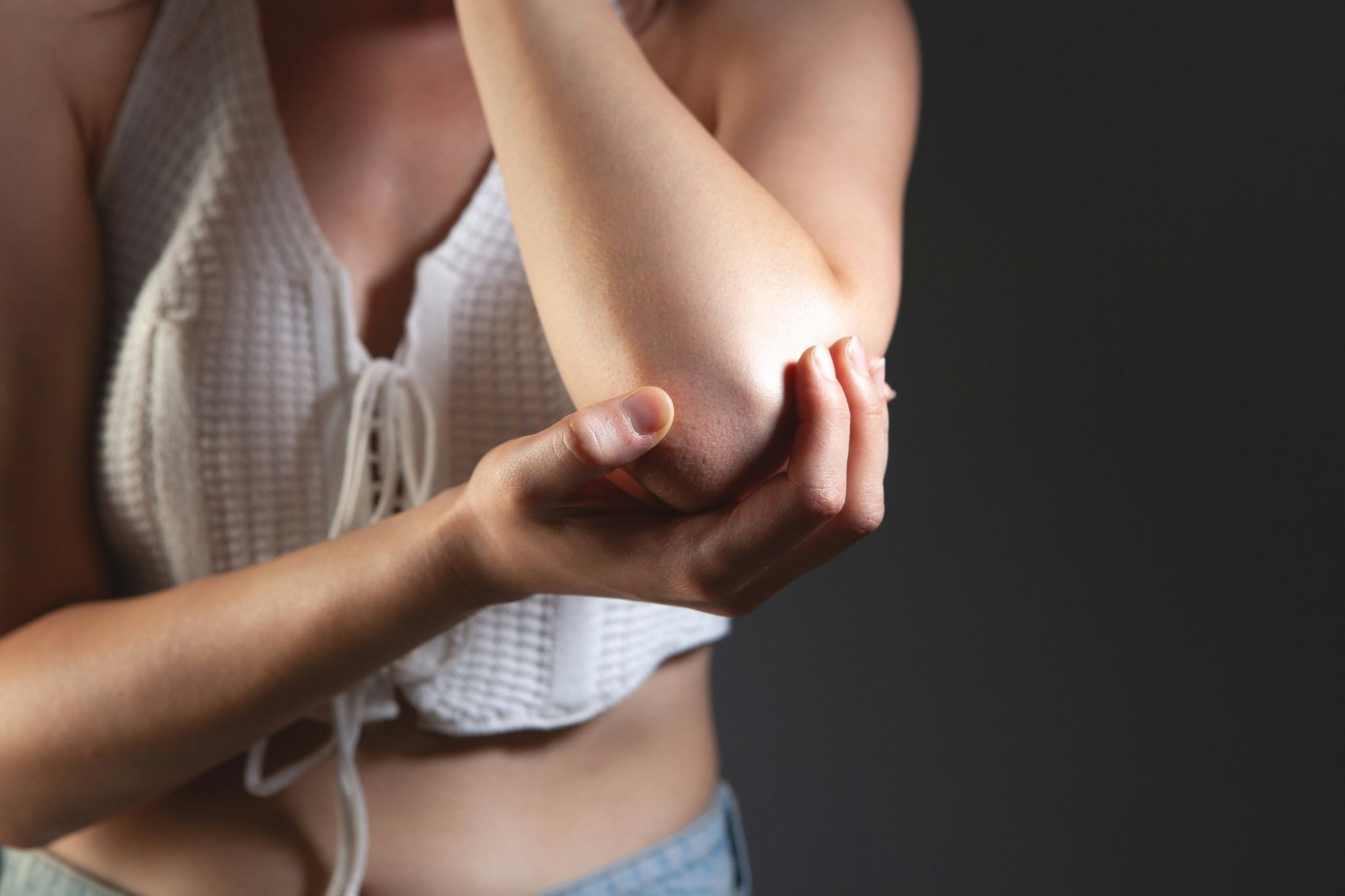
Elbow pain isn't always "just overuse."
You've probably heard it before. "You're overdoing it. Rest it."
But not all elbow pain is the same. Two of the most common causes are tennis elbow and golfer's elbow. And despite the names, you don't have to play either sport to get them.
Typing, lifting, gripping, household chores, manual work and repeated wrist movements can all do it.
The biggest difference is simple. Tennis elbow hurts on the outside of the elbow. Golfer's elbow hurts on the inside.

But knowing which one you have matters. It decides which muscles are involved, which exercises help, how you manage load and how you recover.
Tennis elbow: pain on the outside
Tennis elbow, clinically called lateral elbow tendinopathy, involves the tendons that connect your forearm muscles to the outer side of the elbow. These muscles mainly extend your wrist and fingers.
Tennis isn't the only cause. Repetitive gripping, lifting, twisting, computer work, DIY jobs and racquet sports can all put stress on these tissues.
Common symptoms:
— Pain and tenderness on the outside of the elbow
— Pain that travels down the forearm
— Discomfort while gripping
— Pain when extending the wrist or repeating wrist movements
— Reduced grip strength
— Pain lifting a cup, a bag or a dumbbell
It usually builds gradually. There's often no single moment where you got hurt.
Golfer's elbow: pain on the inside
Golfer's elbow, or medial elbow tendinopathy, affects the tendons of the forearm muscles that flex the wrist and fingers and rotate the forearm.
Again, you don't need a golf club. Repetitive gripping, lifting, wrist flexion, twisting, weight training, gardening and manual work can all overload these tissues.
Common symptoms:
— Pain and tenderness on the inside of the elbow
— Pain that spreads toward the inner forearm
— Discomfort while gripping
— Pain when flexing the wrist or rotating the forearm palm-down
— Weakness in the hand or wrist
— Occasionally, tingling or numbness toward the ring and little fingers
Tennis elbow vs golfer's elbow: the key difference
Tennis elbow
— Medical term: lateral elbow tendinopathy
— Pain location: outside of the elbow
— Main muscles involved: wrist and finger extensors
— Aggravated by: gripping, wrist extension, twisting
— Common in: racquet sports, typing, tools, repetitive lifting
Golfer's elbow
— Medical term: medial elbow tendinopathy
— Pain location: inside of the elbow
— Main muscles involved: wrist and finger flexors and pronators
— Aggravated by: gripping, wrist flexion, forearm pronation
— Common in: golf, lifting, gripping, tools, repetitive wrist movements
Both are overuse tendon problems. The "-itis" in their older names is misleading. They're generally considered tendinopathies, not simple acute inflammation.
Why does it happen?
Rarely one movement. Usually a mismatch.
The load your tendon is taking is higher than the capacity it currently has.
That can happen when you:
— Suddenly increase training volume
— Do too much gripping-heavy work
— Return to sport after a long break
— Repeat the same task with too little recovery
This is why stopping all movement isn't always the answer. Cutting back aggravating activities at first helps. Then you rebuild strength and load tolerance gradually. That works better in the long run.
Exercise and recovery
Exercise is a core part of managing both conditions. A structured rehab programme gradually improves the strength and endurance of the muscles and tendons around the elbow.
The American Academy of Orthopaedic Surgeons (AAOS) recommends progressive stretching and strengthening, typically building over several weeks.
Depending on you, rehab may include:
— Gentle wrist and forearm mobility
— Isometric exercises
— Controlled wrist flexion or extension strengthening
— Forearm pronation and supination work
— Gradual grip strengthening
— Progressive resistance training
— Adjusting the activities that aggravate it
The goal isn't to stop using your arm forever.
The goal is to help your tendon handle everyday and training loads again.
Dose matters too. If pain keeps getting worse during or after a session, that's your signal. Reassess the exercise, the resistance, the volume or the technique.
Prevention: build capacity, don't just avoid movement
If you're active, prevention isn't about avoiding every movement that stresses the elbow. It's about building strength and raising your workload gradually.
A few strategies that help:
Increase training volume and resistance gradually
Avoid sudden jumps in grip-heavy exercises
Strengthen your wrists and forearms progressively
Watch your technique when lifting and playing
Take breaks from repetitive work
Modify activities that keep triggering pain
Allow enough recovery between high-load sessions
When should you seek professional help?
Most cases improve with the right conservative management. But persistent or severe symptoms shouldn't be ignored.
A doctor or physiotherapist can assess your elbow and check whether the symptoms are really coming from the tendon or from another structure.
Get assessed if you notice:
— Significant swelling
— Loss of movement
— Substantial weakness
— Numbness or tingling
— Pain after a significant injury
The takeaway
Tennis elbow and golfer's elbow have different names. But they share one thing: the tissues around your elbow are being asked to handle more than they can currently tolerate.
The easiest way to tell them apart:
Tennis elbow → outside of the elbow → wrist and finger extensors
Golfer's elbow → inside of the elbow → wrist and finger flexors and pronators
The good news is that both commonly improve with activity modification, progressive exercise and patience.
Don't avoid movement completely. Rebuild the strength, grow the tendon's capacity and return to your routine step by step.
At HB+, we help you build a body that's ready for the load you put on it, and a recovery process you can stick to. Elbow pain or not, the principle is the same: train smart, recover well and build capacity that lasts.
Struggling with elbow pain that won't settle? Explore HB+ coaching and physiotherapy-led programmes at hbplus.fit.
References
American Academy of Orthopaedic Surgeons (AAOS). Therapeutic Exercise Program for Epicondylitis (Tennis Elbow / Golfer's Elbow). OrthoInfo.
NHS / University Hospitals Plymouth. Tennis Elbow – Lateral Elbow Tendinopathy.
NHS / My Joint Health Hub. Lateral Elbow Pain – Tennis Elbow.
NHS / My Health Devon. Golfers & Tennis Elbow – Medial & Lateral Epicondylitis.
NHS / My Joint Health Hub. Medial Elbow Pain – Golfer's Elbow.

Be the first to know about every new letter.
No spam, unsubscribe anytime.