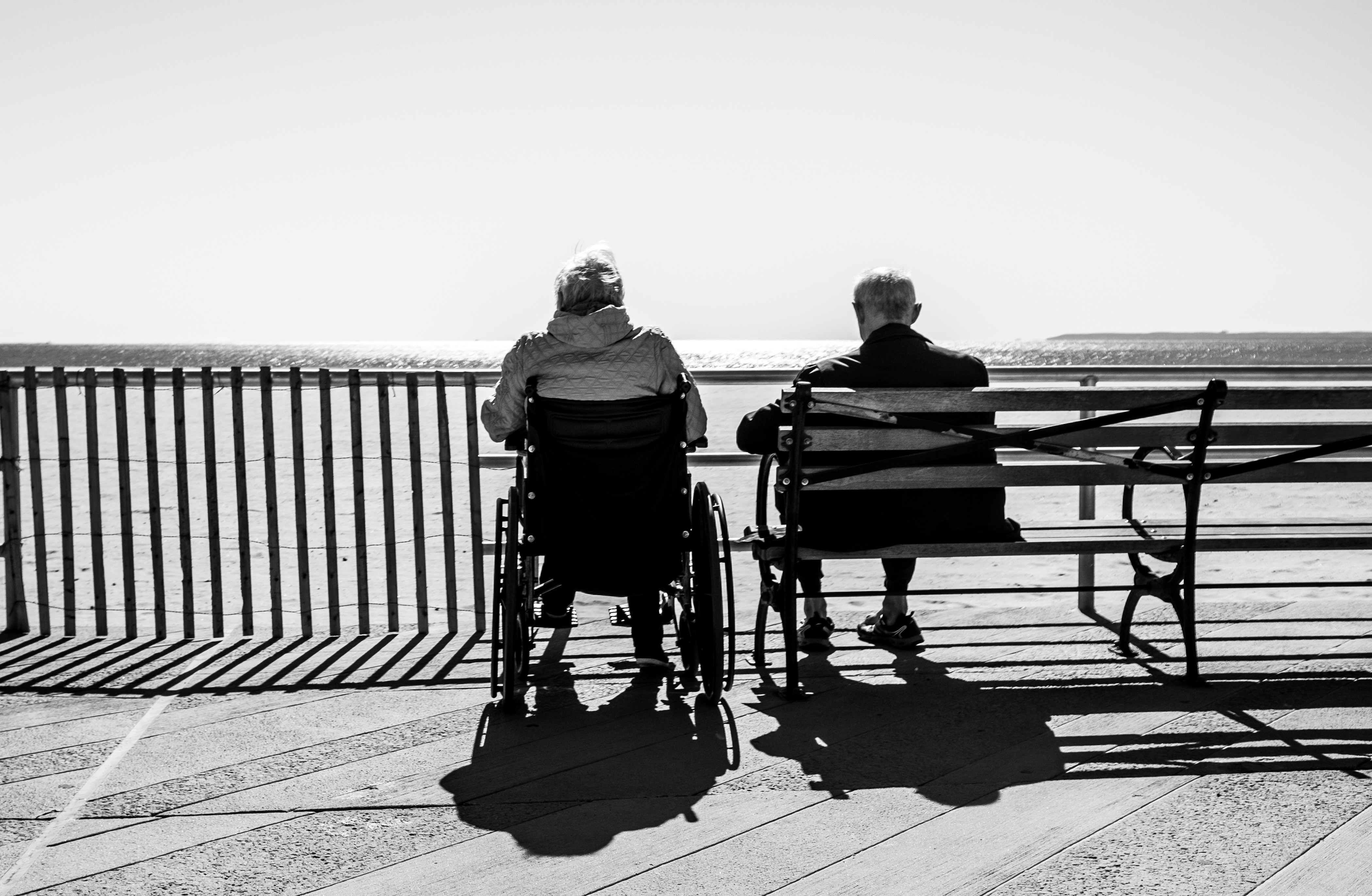
You may be 40 on paper—but your body could be ageing faster, slower, or right on schedule.
Your birthday tells you how many years you've passed since your birth. But it doesn't necessarily tell you how well your body is functioning.
Think about two people who are both 50. One exercises regularly, sleeps well, maintains muscle, eats a nutrient-dense diet, and has good metabolic health. The other is sedentary, chronically stressed, sleeps poorly, and has several metabolic risk factors.
Same chronological age. Very different physiological realities.
This is where the concept of biological age offers a new perspective.
Biological age attempts to capture aspects of how your body is ageing—not simply how many candles are on your birthday cake. Researchers now use a range of biomarkers and mathematical models, including clinical and molecular measures, to estimate this process.
But what does it actually mean for you—and can you do anything about it?
Chronological Age Is a Number. Biological Age Is a Process.
Chronological age is simply the number of years since you were born.
Biological age is more complicated. It reflects aspects of the structural and functional changes occurring in your cells, tissues, and physiological systems as you age.
Ageing involves the gradual accumulation of molecular and cellular damage, but these changes don't happen at exactly the same rate in everyone. The World Health Organization (WHO) notes that age-related changes are neither linear nor consistent, and are only loosely associated with age in years.
That helps explain why one 70-year-old may remain physically active and independent, while another person of the exact same age experiences substantial functional decline much earlier.
Put simply, your chronological age tells you how long you've been alive. Your biological biomarkers give you clues about how you are ageing.
How Is Biological Age Measured?
There isn't a single test that tells the complete story. Researchers use several types of "ageing clocks" to measure distinct aspects of biological decline:
Epigenetic Clocks: These analyze patterns of DNA methylation—chemical markers that regulate how genes are switched on or off without altering the DNA sequence itself. By measuring these patterns across thousands of genomic sites, researchers can estimate biological age and track how fast someone may be aging.
Phenotypic Clocks: These utilize routinely measured clinical and blood biomarkers (such as HbA1c, lipid profiles, inflammatory markers, and liver/kidney function tests) to score systemic physiological age.
A 2024 systematic review published in Aging highlighted that both phenotypic and epigenetic clocks offer unique predictive insights into mortality and morbidity beyond chronological age alone. Because different clocks evaluate different physiological dimensions, a biological-age score should be viewed as an informative proxy rather than an absolute diagnosis.

What Can Make Your Body Age Faster?
Your genes matter—but they aren't the whole story.
Ageing is influenced by the cumulative effects of lifestyle, environment, nutrition, physical activity and other exposures throughout life. WHO specifically identifies factors such as poor diet, physical inactivity, smoking and other health risks as influences on health outcomes later in life.
Consider the three HB+ pillars:
1. Body: Use It or Gradually Lose It
Muscle and physical function are closely tied to healthy ageing.
Staying physically active helps support heart health, mobility, physical function and independence. WHO recommends regular physical activity across the lifespan and highlights its role in reducing health risks and maintaining function.
You don't have to exercise like a professional athlete to stay physically capable.
Strength training, walking, mobility work, balance exercises and cardiovascular activity can all have a place in a sustainable routine.
The goal isn't simply to "burn calories."
The goal is to keep your body capable.

2. Gut: Feed the Systems That Support You
Nutrition is another piece of the ageing puzzle.
A balanced, nutrient-dense diet provides the protein, essential fats, vitamins, minerals and other compounds needed to maintain tissues and support normal physiological function.
Your gut plays an important role in digestion, nutrient absorption and immune function. This makes the quality of your diet important not only for weight management, but also for maintaining overall health as you age.
There is no single "anti-ageing food."
Instead, think about your dietary pattern:
Adequate protein to support muscle maintenance
Plenty of fibre-rich plant foods
A variety of colourful fruits and vegetables
Healthy sources of fats
Low GI, high fibre, minimally processed complex carbohydrates to support daily energy needs
Minimally processed foods most of the time
Adequate hydration
Healthy ageing is not about finding one superfood. It is about creating a pattern your body can live with for decades.

3. Mind: Your Recovery Matters Too
Ageing isn't only a physical process.
Sleep, stress, emotional wellbeing and social connection influence how well you function and recover.
If your days are dominated by chronic stress and your nights by poor sleep, simply adding another supplement or workout may not address the bigger picture.
Healthy ageing therefore isn't just about extending lifespan. WHO defines healthy ageing around developing and maintaining the functional ability that enables wellbeing in older age.
That means asking a better question:
Can you continue doing the things that make life meaningful to you?
Can you climb stairs? Carry groceries? Get up from the floor? Concentrate at work? Sleep well? Enjoy meals? Maintain relationships? Recover from a stressful day?
These abilities matter.

Can You Actually Lower Your Biological Age?
This is where the topic needs some caution.
You will often see claims that a particular diet, supplement or programme can "reverse your biological age by X years."
Science isn't that simple.
Some biological-age measures are associated with disease risk and mortality, and research suggests that accelerated epigenetic ageing may provide information beyond chronological age. For example, a systematic review and meta-analysis found associations between higher DNA-methylation age and mortality risk. However, the authors also noted limitations and concluded that more research is needed before these measures can be considered definitive clinical biomarkers.
So rather than obsessing over a single biological-age number, focus on the modifiable behaviours that support healthy ageing.
That means:
Build and preserve muscle through regular resistance exercise.
Move consistently, including walking and cardiovascular activity.
Eat for nourishment, not just calories.
Prioritise protein, fibre and micronutrients as part of a balanced dietary pattern.
Protect your sleep and establish a sustainable sleep routine.
Manage chronic stress through movement, relaxation, mindfulness or other strategies that work for you.
Avoid smoking and minimise other known health risks.
Monitor your metabolic and cardiovascular health with appropriate medical guidance.
Interestingly, emerging research continues to investigate whether lifestyle factors can influence biological-age measures. A 2026 systematic review and meta-analysis specifically examined physical activity in relation to DNA-methylation-based biological-age measures, highlighting how this field is continuing to evolve.
The Real Goal Isn't to Be Younger

Here's the mindset shift worth remembering: You don't need your body to be 30 when you're 50.
The goal isn't to fight your chronological age. The goal is to make your years healthier, stronger and more functional.
You cannot stop time. But you can influence many of the behaviours and environmental factors that shape how you move through it.
So instead of asking:
"How young is my biological age?"
Try asking:
"Are the routines I practice today actually helping my future self stay physically strong, agile, and mentally sharp?"
At HB+, we believe healthy ageing is not about perfection or turning back the clock. It is about supporting your Body, Gut and Mind so you can build health that lasts.
Ready to understand your health beyond the number on your birth certificate? Explore HB+ wellness programmes and take the first step towards a healthier future.
References
World Health Organization. Ageing and health (2025).
Teschendorff AE, Horvath S. Epigenetic ageing clocks: statistical methods and emerging computational challenges. Nature Reviews Genetics (2025).
Warner B, et al. A systematic review of phenotypic and epigenetic clocks used for aging and mortality quantification in humans. Aging (2024).
Fransquet PD, et al. The epigenetic clock as a predictor of disease and mortality risk: a systematic review and meta-analysis. Clinical Epigenetics (2019).
Horvath S, Raj K. DNA methylation-based biomarkers and the epigenetic clock theory of ageing. Nature Reviews Genetics (2018).
World Health Organization. WHO Guidelines on Physical Activity and Sedentary Behaviour (2020).

Be the first to know about every new letter.
No spam, unsubscribe anytime.