
That first step out of bed. The one that makes you wince before your feet even hit the floor.
You've told yourself it's just tired feet old shoes. Too much standing yesterday.
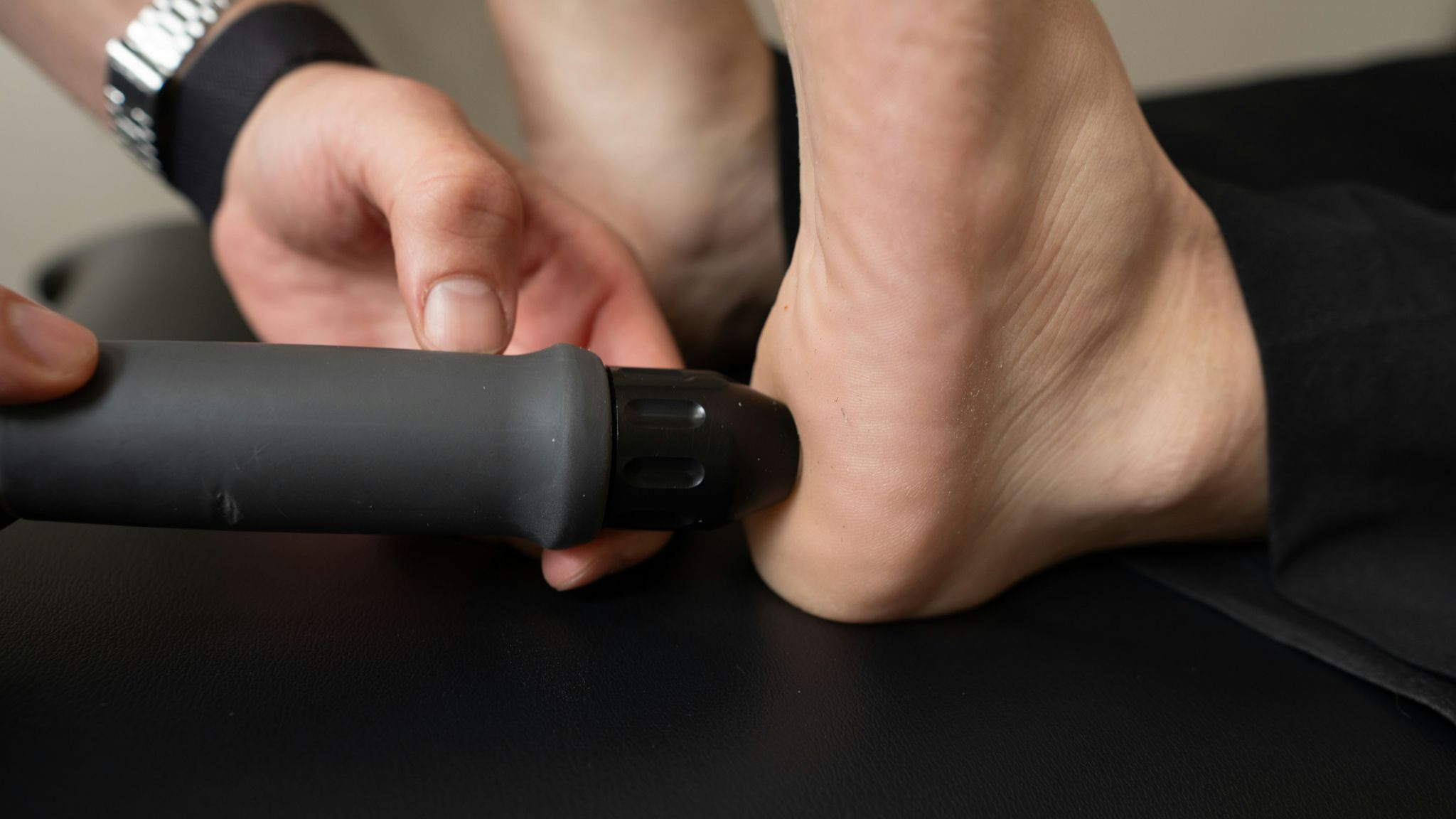
But if that sharp heel pain keeps showing up morning after morning, it might be plantar fasciitis — one of the most common causes of heel pain, and one of the most misunderstood.
Here's the mistake almost everyone makes: they treat it like a "rest and it'll heal" problem. It isn't. The plantar fascia — that strong band of tissue running along the bottom of your foot doesn't get better by doing nothing. It gets better by learning to handle load again.
At HB+, we look at recovery the same way we look at everything: Body, Gut, Mind working together, not in isolation. Plantar fasciitis recovery is no different.

What's Actually Happening in Your Foot
The pain usually sits around the underside or inner heel. It's worst during those first few steps after waking, or after you've been sitting for a while.
A few things drive it: sudden spikes in walking or running, standing for long stretches, hard surfaces, tight calves, stiff ankles, certain foot mechanics, and extra body weight.
Here's what most people get wrong: plantar fasciitis isn't just "inflammation." It's repetitive tissue overload — sometimes with degenerative changes. Which means chasing temporary pain relief misses the point entirely. The real goal is building your foot's capacity to handle load again.
Body: Where Recovery Actually Begins
1. Reduce the Load Don't Eliminate It
When every step hurts, stopping completely feels like the obvious move. It isn't.
Identify what's aggravating your symptoms and dial that back — don't shut everything down. If running is the trigger, swap it temporarily for cycling or swimming. You keep your fitness. You lose the repetitive impact.
This is relative rest, not surrender.
2. Loosen What's Tight
Restricted calves and stiff ankles push more stress through your foot. Two moves that help:
Standing calf stretch — Hands on a wall, affected heel grounded, hips shift forward until you feel the stretch. No bouncing.
Plantar fascia stretch — Seated, cross the affected foot over your knee, gently pull your toes back toward your shin. Hold. Repeat.
If mornings are brutal, do the plantar fascia stretch before your feet even touch the floor.
3. Build Strength, Not Just Flexibility
Stretching gets you halfway. The other half is strength.
Your foot and ankle need to handle walking, standing, running, jumping — real life — again. That means targeted work for your calves, foot and ankle muscles, intrinsic foot stabilizers, and lower limb overall.
The principle that matters most here: progressive loading. Start manageable. Build from there. Rushing this step is how flare-ups happen.
4. Your Shoes Are Part of the Treatment Plan
What's on your feet all day either helps or hurts.
Choose cushioned, supportive footwear during recovery. Skip long barefoot stretches on hard floors if that triggers symptoms. Replace shoes that have quietly worn out. Heel cups or arch support can help redistribute pressure — but they support the plan, they don't replace it.
5. Body Weight Matters — But Not the Way You Think
More load on the plantar fascia with every step means body weight is a legitimate factor here. But this isn't a call for rapid weight loss.
It's a call for consistency: steady nutrition, enough protein, strength training where your body tolerates it, real sleep, and gradual increases in daily movement.
Gut: Recovery Needs Fuel
Nutrition won't "cure" plantar fasciitis on its own. But your tissue can't repair itself without the right building blocks.
That means:
Enough protein
Fruits and vegetables
Fibre-rich whole grains
Healthy fats
Enough fluids
A varied, micronutrient-rich diet
Protein does the heavy lifting here — it supplies the amino acids your tissue needs to actually repair. Forget chasing one "anti-inflammatory" superfood. Your overall pattern matters far more than any single ingredient. And no supplement replaces proper rehab, nutrition, sleep, and load management — full stop.
Mind: The Part Nobody Talks About
Here's the part that quietly derails most people's recovery: the mental side.
Symptoms fluctuate. You'll feel good for days, push a little harder, and then feel that familiar twinge again.
That doesn't mean you're back at square one. It means you're building tolerance — and tolerance isn't linear.
Track the signals that actually matter:
Morning heel pain
Pain while walking
Daily activity levels
Exercise tolerance
Recovery after activity
Comfort during daily tasks
This is how you catch the pattern — doing too much on a good day, then paying for it the next.
Your Four-Stage Recovery Framework
Stage 1 — Calm it down. Cut back on what's clearly aggravating your heel. Supportive shoes. Low-impact cardio.
Stage 2 — Restore mobility. Bring in calf and plantar fascia stretching, especially if stiffness is part of the problem.
Stage 3 — Build strength. Progressive loading through the foot, ankle, calf, and lower limb tailored to your symptoms.
Stage 4 — Return to activity. Gradually bring back running, jumping, longer walks. Never jump straight back to your old training volume.
Timelines vary person to person. But here's an encouraging number: over 90% of people improve within 10 months using simple, conservative treatment methods.
Small Daily Habits That Add Up
Supportive shoes during long standing or walking days
No sudden spikes in walking or running volume
Replace worn-out shoes before they replace your recovery
Swap in cycling or swimming when impact aggravates symptoms
Stay consistent with mobility and strength work
Don't push through significant pain
Increase intensity gradually — never in leaps
Get assessed if things aren't improving
A cloth-covered ice pack for 15 minutes, or a frozen-bottle roll, can also ease symptoms short-term.
When It's Time to See a Professional
Not all heel pain is plantar fasciitis.
Get assessed if:
The pain is severe or getting worse
You can't comfortably bear weight
Nothing's improving despite consistent self-management
Pain started after an injury
You notice swelling, numbness, or anything unusual
It's disrupting your work, sleep, training, or daily life
A physiotherapist, sports medicine professional, podiatrist, or orthopaedic clinician can help you build the right plan.
Stronger Feet, Not Just Pain-Free Feet
Recovery isn't about waiting for the pain to vanish. It's about rebuilding your ability to walk, train, and move without your foot breaking down under the same load again.
Don't judge your progress by one bad morning. Judge it by the bigger picture: Is your tolerance improving? Are flare-ups getting further apart? Can you do more without paying for it?
Progress isn't perfection. It's direction.
Your feet carry you through every rep, every walk, every single day. Give them a recovery plan that actually works — start at hbplus.fit.

Be the first to know about every new letter.
No spam, unsubscribe anytime.