
We need to understand what growth plates actually are.
Growth plates are not weak points waiting to fail. They are active, dynamic tissues designed to respond to stress, hormones, and movement. They’re responsible for lengthening bones as children grow.
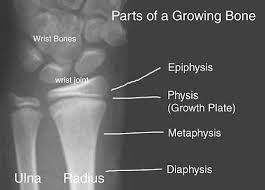
This process is guided primarily by:
Growth hormone
Sex hormones during puberty
Nutrition, sleep, and overall health
Yes, growth plates are softer than mature bone. And yes, they can be injured. But injury does not automatically mean permanent damage, and it certainly does not mean that normal, well-managed loading is harmful.
Orthopaedic research has consistently shown that most growth plate injuries come from sudden trauma, not progressive loading. Falls, collisions, awkward landings, and high-impact accidents are the most common causes whether on a field, a playground, or a staircase.
When fractures do involve the growth plate, what matters most is alignment and treatment, not the activity that preceded it. Research by Salter and Harris demonstrated that when growth plate fractures are properly realigned and stabilized, long-term growth disturbances are rare. Even when partial closure occurs, the effect on height is often minimal — especially if the child is near the end of their growth phase.
Our body is not as fragile as we fear. It is far more adaptable than we realize.

Be the first to know about every new letter.
No spam, unsubscribe anytime.