
You track your steps. You track your calories. You track your sleep score.
But when's the last time you tracked how hard you can squeeze something?
Probably never. And that's the problem.
Grip strength sounds like a party trick something you'd measure at a carnival strongman booth. But researchers have been quietly using it for decades as one of the most reliable predictors of how well your body is actually functioning. Not how you look. How you function.
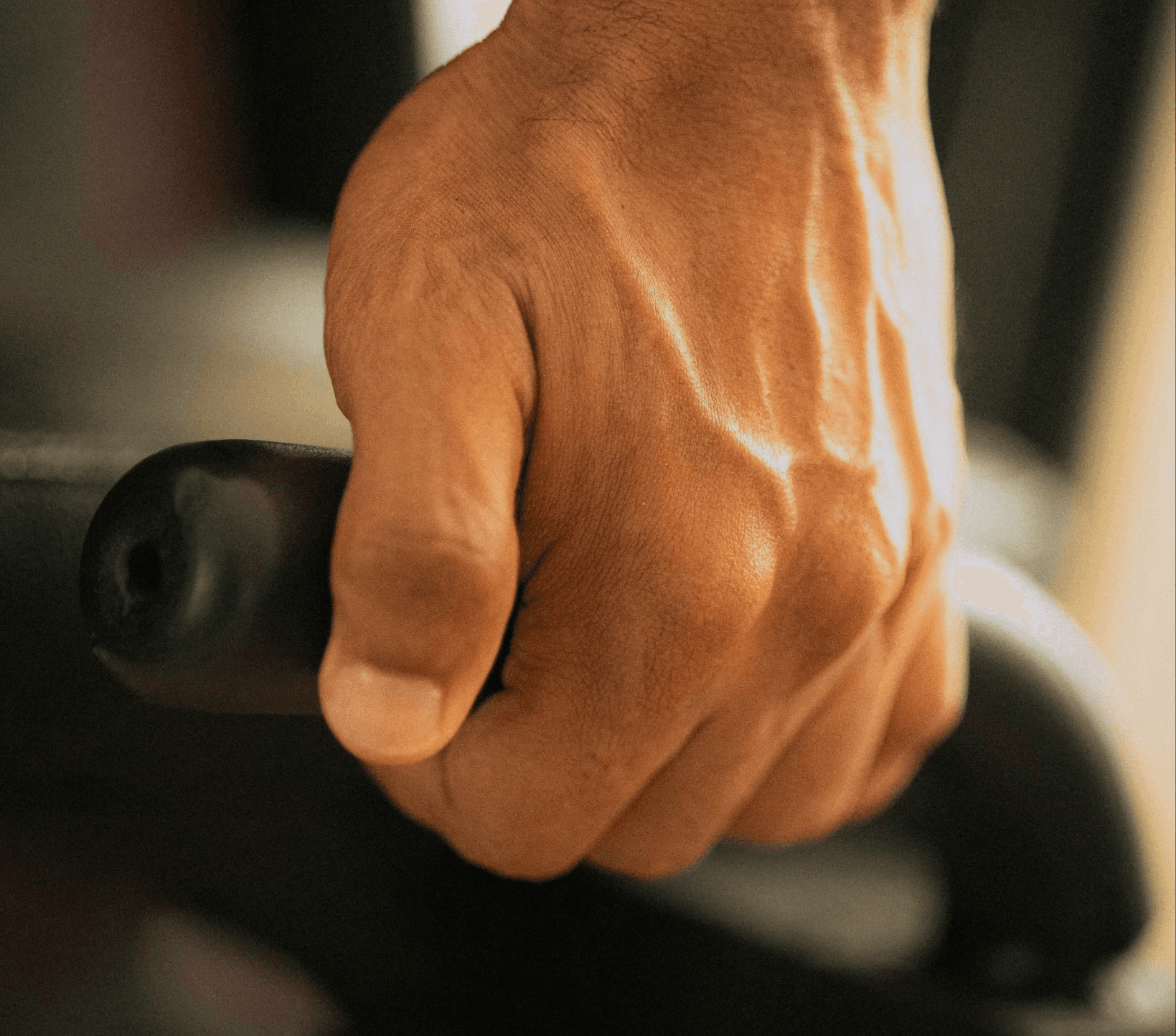
Here's the uncomfortable truth: your hands are talking, and most people aren't listening.
What Your Grip Is Really Telling You?
Grip strength isn't just about your hands. It's a proxy for total-body muscular strength.
When you squeeze, you're recruiting muscles in your forearm, wrist, shoulder, and upper body—all working in coordination. That's not a coincidence. Research has repeatedly linked weaker grip strength to poorer physical function, higher frailty risk, and greater overall health risk, especially as we age.
Muscle naturally declines with age. But how fast it declines depends on what you do your activity levels, your nutrition, your recovery, your lifestyle.
So grip strength becomes a shortcut. A five-second snapshot of how well your body is holding onto its strength.
This is why trainers use it. Not because a strong handshake matters—but because it's an honest number. It doesn't lie the way the mirror sometimes does.
The goal was never to have the strongest grip in the room. The goal is having enough strength for your life, at your age, doing the things you actually want to do.
Your Hands Are Working Overtime (You Just Don't Notice)
Count how many times your hands work for you today.
Gripping your water bottle. Carrying grocery bags. Opening a jar. Holding your phone for six hours straight. Lifting weights. Climbing stairs with a railing. Cooking. Cleaning.
Every single one of these depends on grip and upper-body strength you've probably never thought about until it's gone.
That's the real danger. Strength doesn't disappear overnight. It erodes quietly, one missed workout at a time, until suddenly the jar won't open and the suitcase feels heavier than it used to.
For older adults, this isn't a minor inconvenience it's directly tied to independence. Resistance training that maintains grip and functional strength is one of the most protective things you can do for long-term autonomy.
And if you're younger? Don't get comfortable. Strong hands and forearms support everything from lifting and climbing to racket sports, combat sports, and the physical demands of daily work. Grip strength isn't an "old person problem." It's a "future you" problem if you ignore it now.
The Mind Connection: Strength Builds Confidence, Not Just Muscle
Physical strength does something psychological too.
Carrying your own groceries. Lifting your own luggage. Finishing your workout without needing help. These aren't just physical wins they're proof to yourself: I can still do this.
That feeling compounds. And it becomes especially important as we age, when the fear isn't just weakness it's losing the ability to participate in the life you actually want to live.
This is why grip strength deserves more attention than a random number on a dynamometer. It's a marker of functional independence and functional independence is directly tied to how much control you feel over your own life.
Strength isn't vanity. It's autonomy.
You Can't Out-Train a Bad Diet (Even for Your Hands)
Training builds the demand. Nutrition builds the supply.
Without enough protein, your body doesn't have the raw material—amino acids—to repair and build muscle, including the muscles responsible for your grip. Alongside protein, adequate calories, vitamin D, calcium, iron, and overall dietary quality all play a supporting role in maintaining physical function.
No, a supplement won't magically boost your grip strength. There's no shortcut here. The foundation is boring, and it works:
Move regularly. Strength train consistently. Eat enough protein. Sleep properly. Eat a balanced diet.
A well-functioning gut matters here too—it's what allows your body to actually absorb and use the nutrients you're feeding it. Strength isn't built in the gym. It's built in the kitchen and completed in the gym.
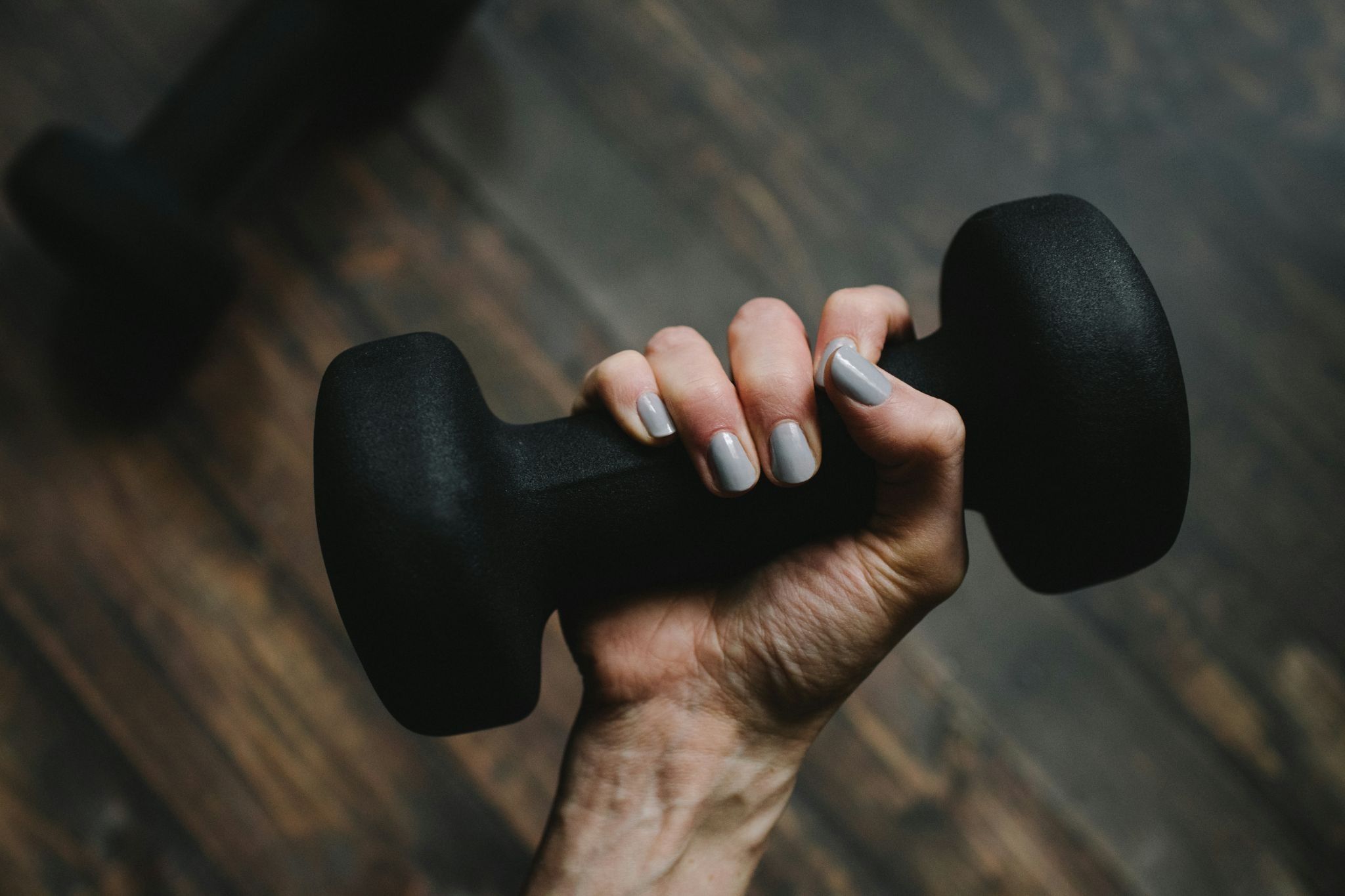
How to Actually Train Your Grip
No fancy equipment required. Just consistency.
Farmer's carries – Hold weights at your sides, walk with an upright posture. Simple. Brutally effective.
Dead hangs – Hang from a secure bar for time (only if it suits your shoulders and current fitness level).
Towel holds – Wrap a towel around a handle or weight for extra grip resistance.
Dumbbell and kettlebell work – Rows, carries, deadlifts, swings. Your grip works overtime in all of these, without you even trying.
Plate pinches – Hold a weight plate between your fingers and thumb. Deceptively hard.
Hand grippers – Great for targeted, progressive grip training.
But don't isolate grip training and call it a day. A well-rounded programme that trains your legs, hips, back, chest, shoulders, arms, and core will do more for your overall strength—and your grip will improve as a byproduct.
5 Practical Ways to Stay Ahead of It
Pay attention to daily function. Are jars, bags, or weights suddenly feeling harder than they used to?
Train consistently. Resistance training a few times a week, matched to your current ability.
Progress gradually. Add resistance or reps over time. Don't max out just to prove a point.
Don't dismiss sudden changes. A sudden drop in grip strength—especially in one hand—isn't "just weakness." Get it checked.
Zoom out. Grip strength is one data point, not the whole picture. Mobility, balance, cardiovascular fitness, nutrition, and sleep all matter just as much.
The Bottom Line
Grip strength starts in your hands. But what it represents goes far beyond them.
It's not a diagnosis. It's not a prediction. It's a window—a quick, honest signal of how your body is ageing and functioning.
Strength is health. Not the aesthetic kind. The kind that lets you carry your own bags, climb your own stairs, and live independently for as long as possible.
So next time you shake someone's hand, carry your groceries up three flights, or pick up a dumbbell—pay attention. That's your body telling you something.
Train your grip. Build your strength. Protect your independence.
Ready to build real, functional strength not just the kind that looks good, but the kind that lasts? HB+ coaching is built around your body, your goals, your life. Start your journey at hbplus.fit.

Be the first to know about every new letter.
No spam, unsubscribe anytime.