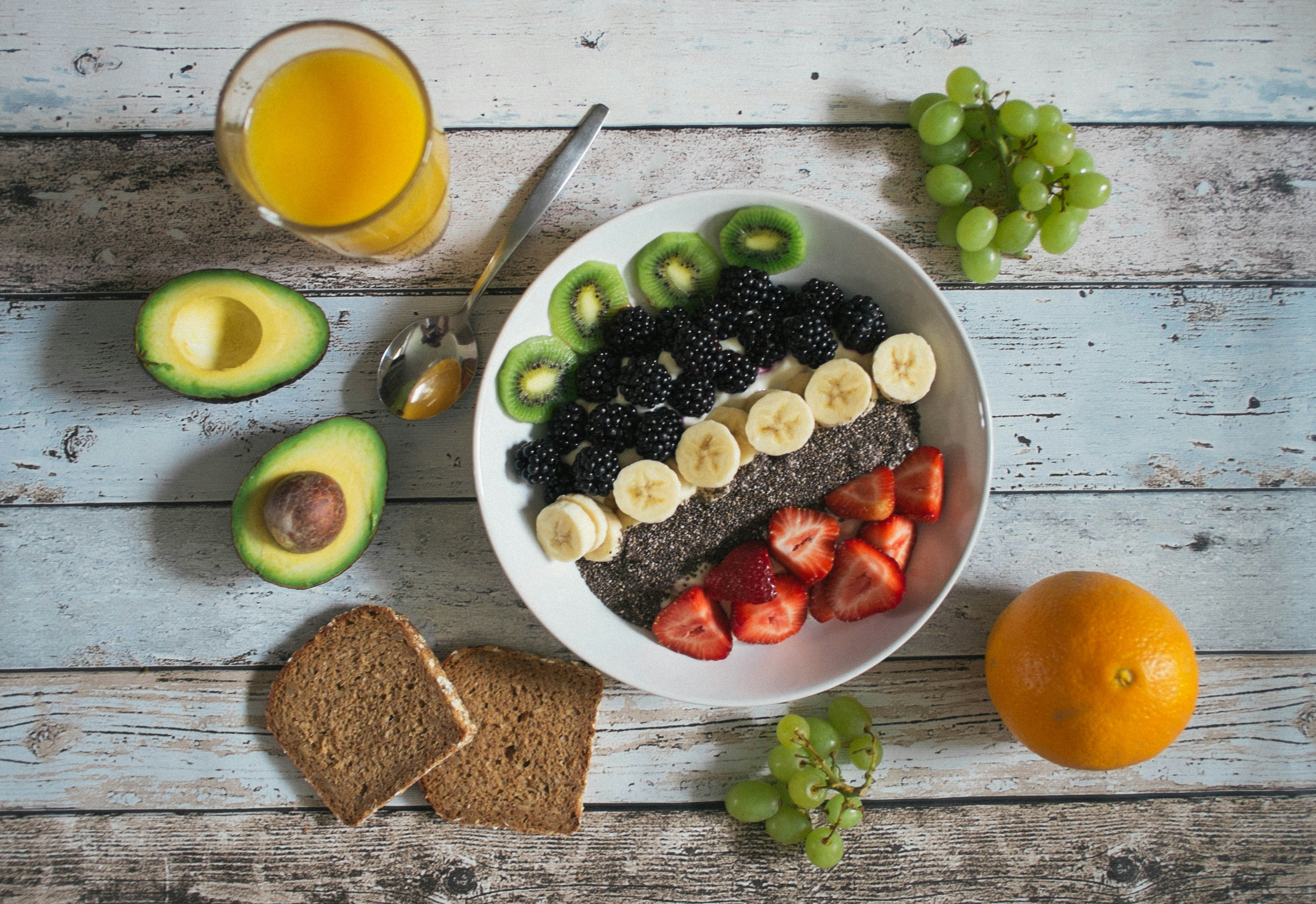
You finished lunch an hour ago. You ate a full plate. Maybe even seconds.And now you're hungry again.Not the "I need a snack" kind of hungry. The "did I even eat?" kind. The kind that makes you question whether your body is broken or if you're just not eating the right things.
Here's my question: What if the problem isn't how much you're eating but what you're eating?
What if you could eat more food, feel fuller for longer, and still lose weight?
Sounds like a gimmick, right? Like another diet trend promising magic results with zero effort.
Except it's not magic. It's volume eating. And it's backed by research that's been around for decades — we just forgot to pay attention.This is the story of how eating more can help you weigh less. And why the foods you think are "healthy" might actually be keeping you hungry.
What Is Volume Eating?
Let me explain this simply.Volume eating means consuming large amounts of food that fill your stomach, while keeping your total calories low.You're not eating less. You're eating differently.You choose foods that have fewer calories per gram what researchers call low-calorie-density foods. These foods let you eat massive portions without blowing past your calorie targets.You feel full because of volume (physical bulk in your stomach), not because you consumed a ton of calories.
Think about it this way:
100 calories of chips = a handful that disappears in 30 seconds.
100 calories of cucumber = enough to fill an entire bowl.
Same calories. Completely different experience.One leaves you wanting more. The other actually fills you up.That's volume eating.
The Science Behind Feeling Full
Here's what most people don't understand about hunger: Your body doesn't count calories. Your stomach measures volume.When your stomach stretches, it sends signals to your brain that say "okay, we're good, you can stop eating now." That's why a big salad makes you feel fuller than a small cookie — even if the cookie has more calories.
Research shows that people eat roughly the same weight of food every day[1]. Not the same calories. The same weight. So if that weight is made up of low-calorie-density foods — vegetables, fruits, soups, whole grains you'll naturally consume fewer calories while still eating enough to feel satisfied[2].
You're not starving yourself. You're just being smarter about what takes up space on your plate.
What Are Low-Calorie-Density Foods?
Calorie density = how many calories a food contains per 100 grams.High-calorie-density foods pack a lot of calories into a small weight:
Oil, butter, ghee
Fried foods
Sugary snacks
Processed foods
Nuts (yes, even the "healthy" ones)
Low-calorie-density foods have fewer calories per serving because they're high in water, fibre, and minimally processed:
Non-starchy vegetables (leafy greens, cucumbers, tomatoes, cauliflower, carrots)
Fruits (berries, apples, oranges, watermelon)
Soups and broths
Whole grains and pasta (especially when cooked with vegetables)
Lean proteins and legumes
Water, fibre, and volume matter more than calorie count.
What Research Actually Says
You want to know what's interesting about volume eating?It's not new. Researchers have been studying this for years. Here's what they found:
1. You eat less without trying
When people eat meals with lower calorie density, they feel fuller and less hungry — even when consuming fewer total calories[3].Not because they're white-knuckling through hunger. Because they're actually satisfied.
2. You lose weight without suffering
Lowering the calorie density of your diet is linked to weight loss and better weight maintenance. Because overall calorie intake decreases, but satiety stays the same.You're not eating less food. You're eating less calories. Big difference.
3. It's sustainable
Unlike restrictive diets that eliminate entire food groups, volume eating doesn't require you to cut out anything completely. You can still eat what you enjoy you just add more high-volume, low-calorie foods to the mix.Whole foods. Vegetables. Fruits. Legumes. Lean proteins. Soups.Nothing extreme. Nothing unsustainable.
But Here's Where It Gets Tricky
Volume eating sounds great on paper. And for a lot of people, it works.But like every strategy, it has limitations. And if you ignore them, you'll run into problems.
1. You might under-eat important nutrients
If you only eat low-calorie-density foods, you risk missing out on healthy fats, complex carbs, and calorie-dense nutrients your body actually needs.Nuts, seeds, millets, avocados — these are energy-dense foods. But they're not the enemy. Your body needs them.
2. You might become obsessed with numbers
Focusing strictly on "calories per gram" can make eating feel mechanical. Stressful. Reductive.For some people, this rigidity leads to obsession. Over-tracking. Even disordered eating.Food shouldn't feel like a math equation.
3. Your gut might not cooperate
Many low-calorie-density foods are high in fibre. Which is great — unless you have a sensitive stomach or digestive issues like IBS.Eating massive portions of vegetables, fruits, and legumes can cause bloating, gas, and discomfort if your gut isn't ready for it.
4. It might not feel satisfying
Low-calorie-density foods aren't always the most delicious. And if your meals don't feel enjoyable, you won't stick with them long-term.Sustainability beats perfection. Every time.
5. Low-calorie doesn't always mean healthy
Just because something is low in calorie density doesn't mean it's nutritious.A sugar-free drink might be low-calorie. But it's also low in vitamins, minerals, and protein. Empty calories in a different form.
How to Do Volume Eating Without Screwing It Up
If you want to try volume eating — and actually make it work — here's how:
1. Base your meals on high-volume, low-calorie foods : Fill your plate with non-starchy vegetables, fruits, soups, and broths. These are your foundation.
2. Don't skip the good stuff
Include lean proteins, complex carbs, and moderate healthy fats. Nuts. Seeds. Millets. Plant-based proteins.Fats and carbs aren't your enemy. They're essential.
3. Focus on variety
Don't just eat fibre and water. Make sure you're getting enough macronutrients (protein, carbs, fats) and micronutrients (vitamins, minerals).
4. Pay attention to more than calories
Track satiety. Energy levels. How you feel after meals. Not just numbers on a label.
5. Go slow if your gut is sensitive
Introduce fibre-rich foods gradually. Build tolerance. Don't shock your system with sudden massive portions of vegetables.
6. Don't obsess
Treat calorie density as a tool. Not a rulebook.
The Bigger Picture
Volume eating is a simple, research-backed strategy to stay full while naturally reducing calorie intake.But it works best when combined with balanced nutrition, enough protein, healthy fats, complex carbs, micronutrients, and mindful eating — not rigid calorie-density rules.
Here's the thing most people miss:A healthy gut-mind-body connection plays a role. When your digestion is supported, inflammation stays low, and your nervous system is calm, your hunger cues, cravings, mood, and energy become more stable.And that makes any eating strategy easier to follow.
Think of volume eating as a helpful tool. Not the whole toolbox.Use it to add more vegetables, fruits, soups, and fibre-rich foods to your meals. While still keeping your diet nourishing, enjoyable, and sustainable.Because the best diet isn't the one that works for 30 days.It's the one you can follow for 30 years.
And if you'd like personalised guidance on choosing the right high-volume, nutrient-dense foods for your goals, HB+ can help.
References:
[1] Eleni Papagiannidou et al., "Dietary Energy Density, Satiety and Weight Management," Journal of Food Processing & Technology 2 (August 2013): 585.
[2] Center for Disease Control and Prevention, Low-Energy-Dense Foods and Weight Management: Cutting Calories While Controlling Hunger, in Don't Lose Your Balance (Kansas State University), Appendix 3.
[3] Nicola J Buckland et al., "A Low Energy-Dense Diet in the Context of a Weight-Management Program Affects Appetite Control in Overweight and Obese Women," The Journal of Nutrition 148, no. 5 (2018): 798–806, https://doi.org/10.1093/jn/nxy041.

Be the first to know about every new letter.
No spam, unsubscribe anytime.