Cycle syncing is a simple yet powerful way to support your body by aligning your nutrition, workouts, and lifestyle with the four phases of your menstrual cycle—menstrual, follicular, ovulatory, and luteal. Each phase brings natural hormonal shifts that affect energy, mood, digestion, strength, and recovery. During the menstrual phase, low hormones mean low energy, so warm, iron-rich foods and gentle movement help you rest and recover. The follicular phase brings rising estrogen, improved digestion, and higher motivation, making it a great time for strength building and creativity. In the ovulatory phase, peak estrogen and a testosterone boost lead to maximum energy, confidence, and performance—ideal for heavier strength training. The luteal phase calls for slowing down, managing PMS, choosing warm grounding foods, and prioritizing sleep as progesterone rises and falls. By working with your cycle instead of against it, you experience better workouts, fewer PMS symptoms, improved digestion, and greater overall balance. Cycle syncing helps you feel in tune with your body and HB+ offers structured guidance to make syncing effortless.
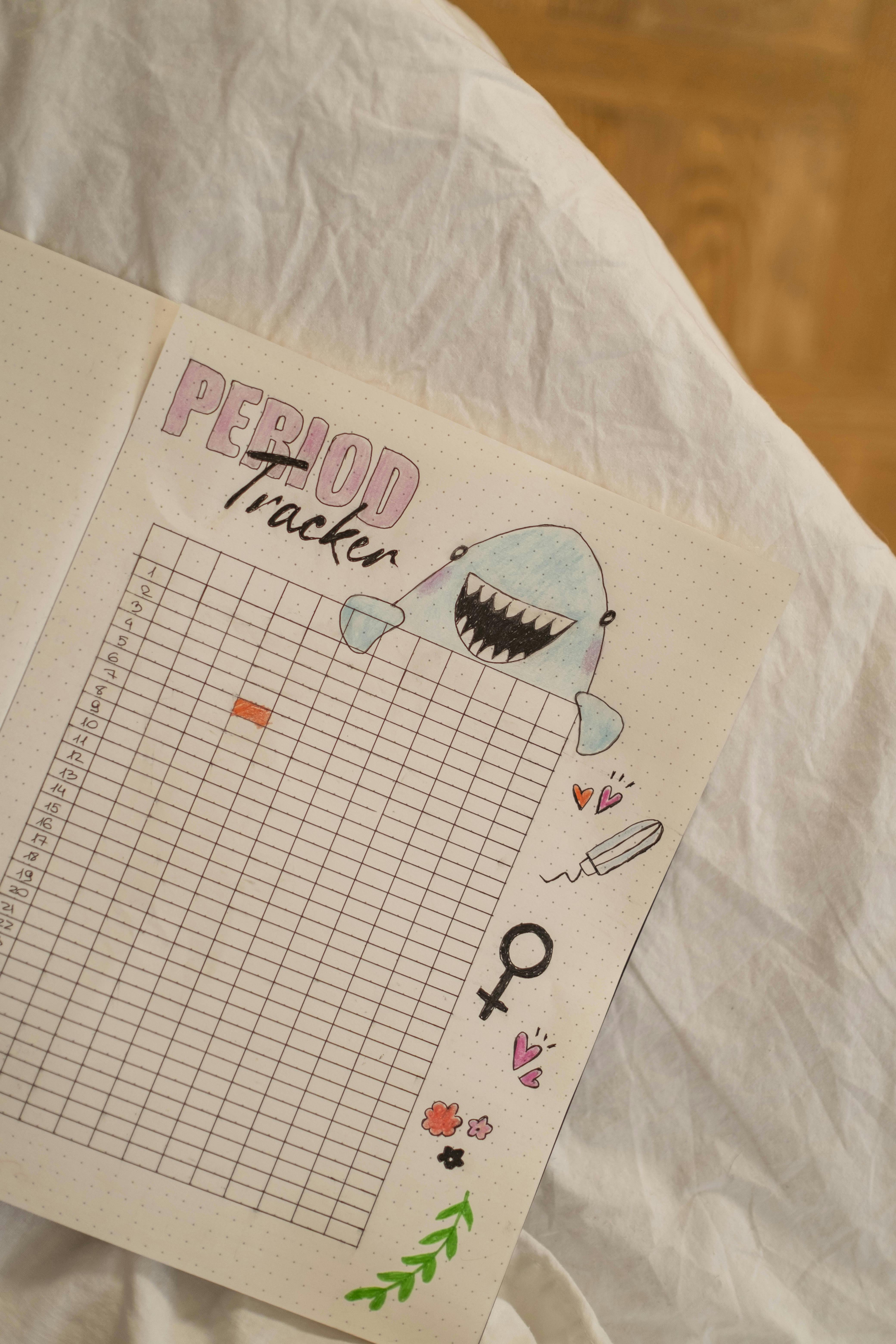
On some days your playlist is perfect, your motivation is high, still you can’t lift the weights you normally do. It’s not a mystery; it’s simply your body signaling that something is different.
Your menstrual cycle is not just about periods, it’s a monthly report card from your body. It’s a four-phase rhythm where your hormones rise and fall, your energy shifts, and your body moves through predictable patterns. These shifts can either support you or throw your routine off, and the key is to adjust your nutrition, workouts, self-care, and lifestyle according to the four phases of your menstrual cycle.
What are the 4 phases:
Menstrual Phase (Days 1–5)
Follicular Phase (Days 1–13)
Ovulation Phase (Days 13–16)
Luteal Phase (Days 16–28)
Do know that phase’s length vary according to a person; ovulation doesn’t always occur on day 14.
Each phase has different hormone levels, which affect your energy, mood, metabolism, digestion, and muscle recovery.
When you align your habits with these shifts, you will feel that your body is working for you, not against you. You might feel:
More energetic
Less bloated
More emotionally stable
Better digestion
More productive
Stronger workouts
Fewer PMS symptoms, to name a few.
PHASE-WISE GUIDE
1. Menstrual Phase (Day 1-5, Your Periods)
What is happening in the body: Body is shedding the uterine lining in the form of Periods. Your hormones are at the lowest in this phase. Therefore, it is normal to feel low energy, slower digestion[1], cramps and the need for warmth.
![[Image depicting the menstrual phase with low hormone levels, low energy, cramps, and slower digestion.source-Pexels]](https://framerusercontent.com/images/XtfVuh6tiQSTb3ll69WUkiaMwPE.jpg)
Focus: Rest, warmth, nourishment, gentle movement
Nutrition:
Warm, mineral-rich foods (soups, dals, khichdi, stews). They will sooth your body and digestive system.
Iron-rich foods because of the blood loss during the periods + vitamin C (to increase Iron absorption).
Omega-3-rich foods like salmon, flax seeds, and walnuts can help ease menstrual cramps thanks to their natural anti-inflammatory properties.
Drinks like chamomile tea and ajwain tea are a great addition to help with menstrual cramps.
Activity level:
Some women might feel exercising will help them relieve their cramps and boost their mood, others might not feel the same. Always listen to your body, it knows what is best for you.
If you feel like working out, it is completely safe to work-out during your periods[2].
Or you can practice walking, yoga, low-impact cardio and deep breathing if you want to keep it light.
Lifestyle:
You can take it slow. Use your time to plan your month, journal, read, meditate. It is the perfect time to focus on yourself and to do some soul searching. Eckhart Tolle, a spiritual teacher and author of the bestselling book, “The Power of Now” says that menstruation can heighten emotions, but staying present turns it into a moment of release and awareness.
You can rest more; it is okay to take a break.
You can go to bed earlier or have slow mornings.
2. Follicular Phase (1-13)
What is happening in the body: This phase overlaps with menstrual phase. It stars on day 1 and ends when you ovulate. After day 5, estrogen starts to rise slowly, making you feel a little more energetic, motivated and fresh. Your digestion also gets better.
Focus: Start fresh, build strength, creativity

Nutrition:
Eat well. Focus on lean protein, complex carbs, veggies, fruits, salads, sprouts and flaxseeds. They will provide steady energy and support rising estrogen levels.
Fermented foods indirectly help with estrogen metabolism by helping gut bacteria[3].
Activity level:
Since energy rises slowly, you can go for moderate strength training, try new workouts or go for HIIT. But do listen to your body.
Lifestyle:
Perfect time for planning or brain heavy tasks.
You can take up new activities or projects.
3.Ovulatory Phase (13-16)
What is happening in the body: Egg is released after maturation. Estrogen peaks + small testosterone spike is there which gives maximum strength, libido, confidence. Most women feel peak energy, but some may feel heaviness or ovulation discomfort, both are normal.
Focus: Peak energy, social connection, high performance
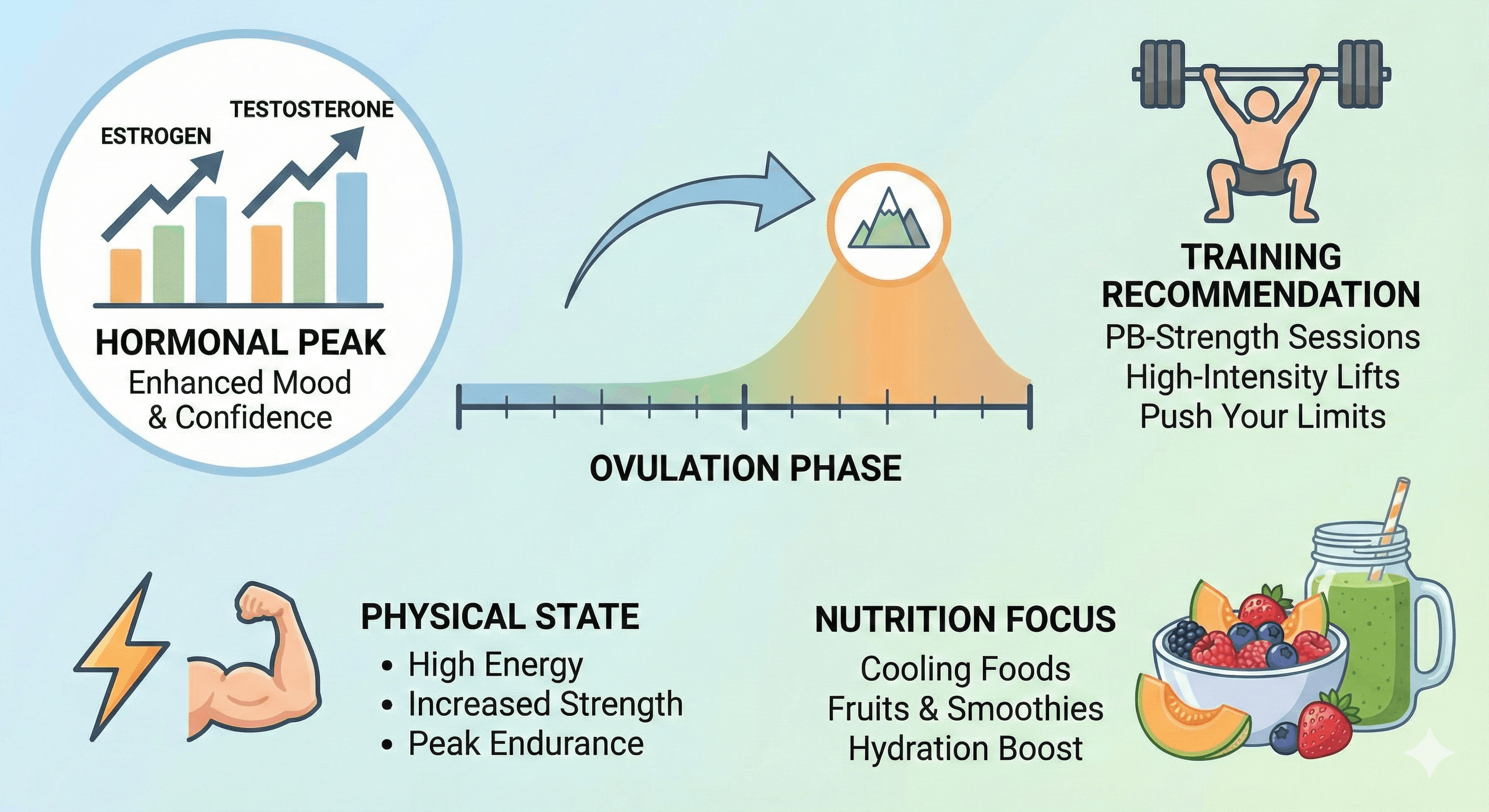
[Infographic showing ovulation with peak estrogen and testosterone, high energy, increased strength, cooling foods like fruits and smoothies, and suitability for PB-strength sessions.]
Nutrition:
Light cooling foods like coconut water, fruits, veggies, smoothies.
Foods rich in B-vitamins.
Fruits like guava and amla for minerals and vitamins.
Activity:
Peak time for heavy strength training, you can go for a higher weight and can even establish a personal best.
Can also include HIIT or explosive movements.
Don’t forget recovery, get enough sleep and protein.
Lifestyle:
Networking, communication, social interactions since libido is at peak and natural confidence is present.
Productivity is high.
If you’re trying to conceive, this natural rise in libido is a great time to increase intimacy. Using a calendar or a period-tracking app can also help you monitor your cycle and identify your ovulation window more accurately.
4. Luteal Phase (16-28 days)
What is happening in the body:
In the early luteal phase, estrogen starts dropping and progesterone rises after ovulation since the body is preparing for possible pregnancy. At the end of the luteal phase, if the egg doesn’t get fertilized, progesterone also drops.
Estrogen and progesterone dip in the late luteal phase combined causes PMS symptoms.
You might get mood swings, cravings etc. don’t worry about it. It is due to a sudden drop in hormones.
Focus: Slow down, stabilize mood, reduce stress
Nutrition:
Warm, grounding foods: dal, millets, soups.
Due to the rise in progesterone, you might feel hungrier than usual[4]. It is completely okay for the body to demand more food. You can go for comforting foods or complex carbs like sweet potato, bananas.
Increase magnesium, B6 (dark greens, nuts, seeds)
Increase Omega-3 for anti-inflammatory effects.
Reduce caffeine, increase fluids
Activity level:
Energy levels start to drop and recovery becomes slower, so scale back your workout intensity and volume. A clinical trial showed that women who focused the majority of their training during the follicular phase and reduced training in the luteal phase saw a 32.6% increase in strength, more than twice the improvement of the 13.1% seen with a regular training routine[5].
Choose moderate cardio, lighter strength sessions, and mobility or restorative yoga instead.
Make quality sleep a top priority.
Lifestyle:
Prioritize calm routines
Early bedtime
Reduce stress + caffeine
Gentle self-care, slower pace
Seed Cycling:
Seed cycling is a simple yet effective hormonal balance strategy that involves eating different seeds for each half of the menstrual cycle to naturally balance estrogen and progesterone levels.
Freshly grounded flax-seeds and pumpkin seeds are included in the first 14 days because they include lignans[6] and zinc, both of which may support healthy estrogen levels. Sesame seeds and sunflower seeds are introduced during the second phase (luteal) for selenium, vitamin E, and essential fatty acids.
A recent study concluded that combining seed cycling with a portion - controlled diet can help improve PCOS symptoms and serve as an effective hormonal management approach[7].
Working with your cycle rather than pushing against it helps your body build strength, reduces PMS, supports smoother digestion, and improves emotional balance and self-awareness. The connection goes both ways, when your gut, mind, and body are thriving, your hormones naturally stay more regulated. And remember, every woman is unique. Tune into your body and adjust these guidelines to match your own rhythm.
If you want structured, easy-to-follow support, HB+ gives you phase-specific nutrition, movement and lifestyle guidance so you can sync effortlessly with your body.
[1] Ixchel M. Brennan et al., “Effects of the Phases of the Menstrual Cycle on Gastric Emptying, Glycemia, Plasma GLP-1 and Insulin, and Energy Intake in Healthy Lean Women,” American Journal of Physiology-Gastrointestinal and Liver Physiology 297, no. 3 (2009): G602–10, https://doi.org/10.1152/ajpgi.00051.2009.
[2] “Physical Activity and Your Menstrual Cycle,” accessed December 3, 2025, https://womenshealth.gov/getting-active/physical-activity-menstrual-cycle.
[3] James M. Baker et al., “Estrogen–Gut Microbiome Axis: Physiological and Clinical Implications,” Maturitas 103 (September 2017): 45–53, https://doi.org/10.1016/j.maturitas.2017.06.025.
[4] Angelica Lindén Hirschberg, “Sex Hormones, Appetite and Eating Behaviour in Women,” Maturitas 71, no. 3 (2012): 248–56, https://doi.org/10.1016/j.maturitas.2011.12.016.
[5] E. Reis et al., “Frequency Variations of Strength Training Sessions Triggered by the Phases of the Menstrual Cycle,” International Journal of Sports Medicine 16, no. 8 (1995): 545–50, https://doi.org/10.1055/s-2007-973052.
[6] W. R. Phipps et al., “Effect of Flax Seed Ingestion on the Menstrual Cycle,” The Journal of Clinical Endocrinology and Metabolism 77, no. 5 (1993): 1215–19, https://doi.org/10.1210/jcem.77.5.8077314.
[7] Harpreet Kour et al., Evaluation of Effect of Seed Cycling on Anthropometric, Biochemical, Hormonal and Nutritional Parameters in the Women Diagnosed with Polycystic Ovarian Syndrome -A Cohort Interventional Study Design, in Journal of Natural Remedies (2024), https://doi.org/10.18311/jnr/2024/36489.

Be the first to know about every new letter.
No spam, unsubscribe anytime.